Published
by Rogers Corporation
Elastomeric Material Solutions
Material changes are rarely simple when a design is already validated.
Targets for compression and gap requirements are set, and long-term durability expectations are defined.
Then, a new question pops up: can we cut the carbon footprint of this component without altering its performance?
That question is occurring more and more across consumer electronics, automotive, and other industries. Mechanical specs stay the same, yet sustainability is now a major part of the evaluation process.
The challenge? How to introduce reductions in carbon impact without messing with performance or validation cycles and avoid adding extra design risks.
We spoke with Alex Cox, Sales Engineer at Rogers Corporation, about these conversations and how PORON® ReSource30 polyurethane foam makes sense in real applications.
Alex Cox, Sales Engineer at Rogers Corporation
I'm seeing that sustainability is coming up earlier in the game, especially in consumer electronics and cars.
In little gadgets like smart speakers, the foam is typically made with a specific task in mind. It might need to dampen sound, seal something tight, or handle vibrations while holding steady under pressure. In cars, it’s very similar – it has to fit certain spots, last a long time, and pass all validation tests.
Alex says, “The main thing folks care about is still how well the foam will work performance-wise. They aren't wanting to completely overhaul their design just to be greener. Instead, they wonder if they can make things more eco-friendly without changing what they've already set up.”
That is where PORON ReSource30 foam fits in. It gives teams a way to evaluate measurable emissions cuts through performance criteria they already understand.
The first question is usually pretty practical: does this material fit the performance window the team is already designing around?
Engineers want to know things like:
Those are the questions that matter because no one wants sustainability to become another variable they must design around.
The way I think about it is this: if the compression window stays consistent and we are not introducing new validation hurdles, sustainability becomes part of the solution instead of an added complication.
Because PORON ReSource30 foam was engineered within the same performance of PORON 30-grade, teams can evaluate it using the same design criteria instead of starting from scratch.
PORON ReSource30 foam makes the most sense in applications where PORON 30-grade polyurethane foam is already being used and sustainability goals need to be met.
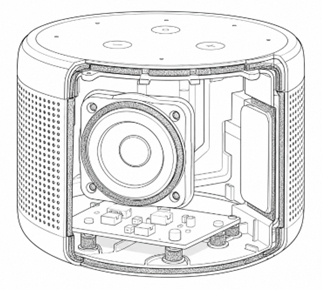
One case I've seen involves a high-volume voice-activated speaker. Inside the tight space, the foam does several critical jobs – supporting gasketing, reducing rub-and-buzz, managing vibrations, and enhancing sound.
Image property of Rogers Corporation. Image generated by AI.
For these designs, how much the foam compresses really counts. Tiny tweaks can impact sealing force, sound, or even produce unwanted noise. The goal here isn't to change what the foam does but instead to reduce carbon use while maintaining the same performance.
As Alex puts it: “We weren't rethinking the foam's role; we just wanted to know if we could make it greener without changing reliable performance.”
For many teams, that is the practical value of PORON ReSource30 material. It gives engineers a way to evaluate sustainability progress inside an application they already understand without moving away from the design criteria that made the original application successful.
Yes. I’m seeing the same type of conversation come up in data centers, energy storage systems, and robotics platforms.
The common thread is enclosure design. These systems often need materials that can help with perimeter sealing, vibration isolation, noise mitigation, compression stability, and tolerance management across complex assemblies.
Consider data centers. For these applications, getting sealing and airflow correct seriously boosts efficiency. For robots, small gaskets handle tight spaces and precise movements. Energy storage systems need good enclosures too; they must seal well, cushion, and manage vibrations.
As electrification, automation, and digital infrastructure continue to grow, I’m seeing more foam being designed in these areas, That creates more opportunities to evaluate part-level carbon reduction without changing the basic performance requirements of the application.
While the conversation may have started in consumer electronics, now it’s becoming more broadly relevant in industrial and infrastructure applications.
In most cases, no.
Mechanical requirements still lead the material selection process. Customers are usually not looking to redesign a part just to improve the carbon profile. What they want is a way to make incremental progress without disrupting a design that already works.
That is where consistency matters. If the material performs within the expected range, sustainability can become part of the approval conversation, especially when procurement, ESG teams, or corporate reporting groups are involved.
I see this most often when teams are trying to connect engineering decisions to broader company goals. They still need the material to meet the application requirements first, but if the emissions reduction is supported by credible documentation, it becomes easier to justify the decision across departments.
For engineers, the goal is to not add complexity and find a lower-carbon option that still fits the existing design, validation process, and supply chain expectations.
In many cases, sustainability initiatives start inside established supply chains.
When teams are looking for carbon reduction opportunities, they often begin with components that are already validated, already understood, and already running at scale. Foam can be a good place to start because it may be a smaller part of the overall system cost, but still create a measurable improvement at the component level. Consistency plays a big role here. When the material meets performance standards, it opens the door for talks on sustainability, particularly when procurement, ESG, or corporate reporting teams step in. This happens frequently when linking engineering choices to overall business aims. Sure, folks still expect materials to cut it based on the job at hand. But, if cutting emissions is backed up by solid data, it makes it simpler to sell the move to various teams.
Engineers aren't aiming to complicate things.
Density is still driven by the application.
The goal is not to use a lower-density material just for the sake of lowering density. The material still has to meet the compression force, sealing, cushioning, and durability requirements of the design.
Where it makes sense, lower-density PORON ReSource30 foam variants can help teams maintain comparable compression force deflection targets while reducing carbon. But that decision still has to be validated against the same criteria engineers already use for PORON 30-grade polyurethane foam.
That means looking at the load conditions, tolerance stack-up, environmental exposure, and long-term performance expectations of the application.
The evaluation framework doesn’t really change. Going for less density is great, but only if it doesn’t skimp on the needs of the project.
Validation continuity comes up over and over again.
Engineers want to understand what changes, what stays the same, and whether introducing the material adds risk to the program. They are usually looking for clarity around compression data, stress relaxation, aging performance, adhesion compatibility, and any documentation needed for internal review.
That is why the conversation has to stay technical. Sustainability may be the reason PORON ReSource30 foam enters the discussion, but the material still has to be evaluated against the same performance expectations as any 30-grade polyurethane foam.
Having clear data and a reliable carbon reduction method makes evaluations more objective. This gives engineering, procurement, and sustainability teams a common basis for their review, rather than treating carbon reduction as a separate concern.
Many engineering teams won't begin their journey towards lower-carbon materials with a total redesign. They'll start by using what they know – familiar applications, set performance needs, and materials that fit into their existing checks and balances.
That is where PORON ReSource30 foam can fit well. It gives teams a way to make progress on carbon reduction without losing sight of the things the part still has to do, like compress consistently, seal properly, and cushion effectively.
The real value is that engineers do not have to evaluate sustainability in a separate bucket. They can look at PORON ReSource30 foam through the same technical lens they already use when specifying PORON polyurethane foam.
PORON ReSource30 foam incorporates 42% sustainable content by weight and delivers measurable cradle-to-gate CO₂ reduction compared to equivalent 30-grade materials.
Request a sample or connect with a Rogers Sales Engineer to evaluate PORON ReSource30 material within your application.
Published on Jun 10, 2026